Agent-Friendly Proptech for Cross-Border Japanese Real Estate
Foreign buyers need a digital layer because they begin far from the property and often outside the Japanese-language market. Local agents need a professional layer because the decisive information and transaction work cannot all be digitized.
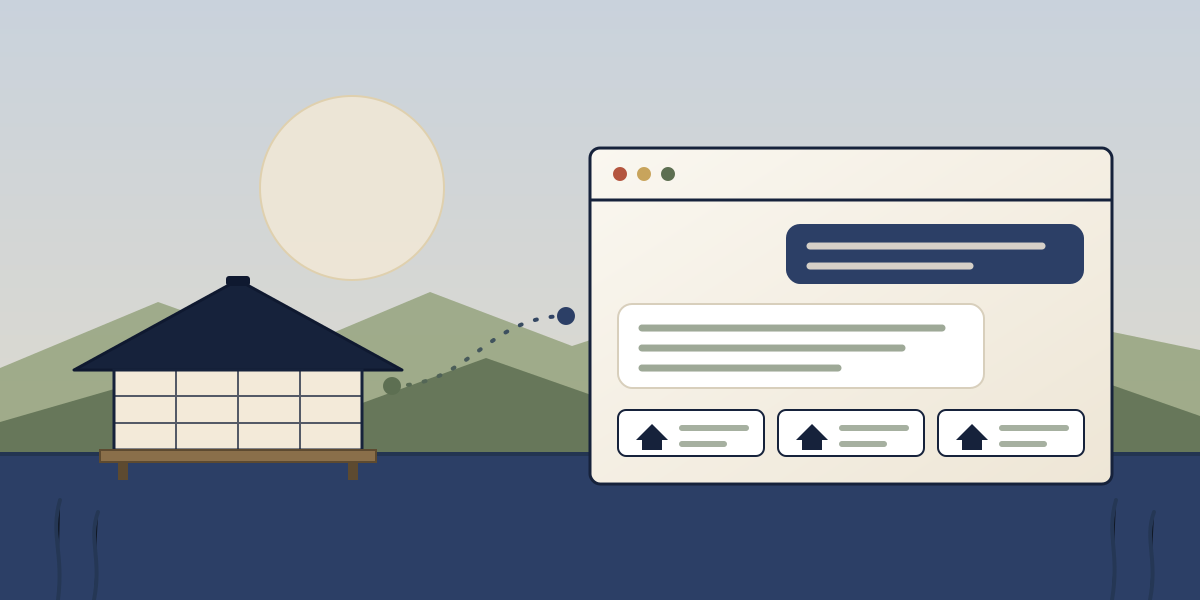
Foreign buyers need a digital layer because they begin far from the property and often outside the Japanese-language market. Local agents need a professional layer because the decisive information and transaction work cannot all be digitized.
Why this matters
The product design challenge is to connect those layers without pretending one can absorb the other.
A practical workflow
- 1. Capture the buyer's intended use, budget, target area, timing and non-negotiable constraints.
- 2. Let the AI research current inventory and narrow the brief before the brokerage spends local time.
- 3. Summarize the surviving properties and explain why each one fits the buyer's stated objective.
- 4. Put every unresolved availability, document, condition or transaction question into a separate human-check list.
- 5. Hand the structured brief to the licensed agent through the brokerage's normal communication and compliance process.
Example prompt
A useful MCP article should leave the reader with something they can run, not just a description of AI. This is a starting prompt for the workflow above:
Show me what can be completed remotely for this property and create a separate plan for the steps that need a local licensed professional.
Where the value comes from
The business can monetize the digital research layer and human support separately, which is cleaner than forcing every buyer into a full-service model from the first click.
Why agents should care
Agents become partners in resolving high-value uncertainty rather than sources of inventory that the platform hides.
Engawa's current MCP is deliberately a research surface. It can search and analyze catalogue data, but property-specific verification, regulated explanations, seller communication, negotiation and closing remain human work. The useful automation is the work before a serious buyer needs an agent, not an attempt to automate the licensed professional out of the transaction.
Guardrails
Do not build revenue claims around referral or brokerage fees that are not actually contracted and compliant.
Engawa is not a licensed real-estate broker. The MCP relays sourced catalogue claims and explicitly marks unresolved information as unknown. Buyers should verify material facts with the responsible agent and appropriate Japanese legal, tax, inspection or registration professionals before acting.
Bottom line
The durable cross-border model is software plus local professional execution.
Use Engawa from your AI assistant
Annual Explorer members can create an API key and connect an MCP client to the Japanese property catalogue.
Need the human part?
Use AI to narrow the field, then bring a qualified local professional into the transaction when a listing becomes serious.
Sources
MCP, Engawa product and market references were checked on 9 August 2026. Product capabilities and third-party services can change, so verify current documentation before building a workflow around them.
Frequently asked questions
What does 'agent-friendly proptech' mean in practice?
It means the software improves discovery, education and handoff without misrepresenting itself as the licensed professional, and it sends property-specific work to agents when local verification or transaction action is needed.
Who is this for agents workflow for?
proptech founders, agents and referral businesses Foreign buyers need a digital layer because they begin far from the property and often outside the Japanese-language market. Local agents need a professional layer because the decisive information and transaction work cannot all be digitized.
What should the AI not assume in this workflow?
Do not build revenue claims around referral or brokerage fees that are not actually contracted and compliant.
Before you go
Get the listings that match what you just read
Buying in Japan takes most people months. One email a week with new listings, what they really cost all-in, and the ones worth a closer look.