Rental Yield on Rural Japanese Houses: How to Model It
Rural Japanese houses can show double-digit gross yields because purchase prices are low. Gross yield is the least interesting number if renovation, vacancy and management are not included.
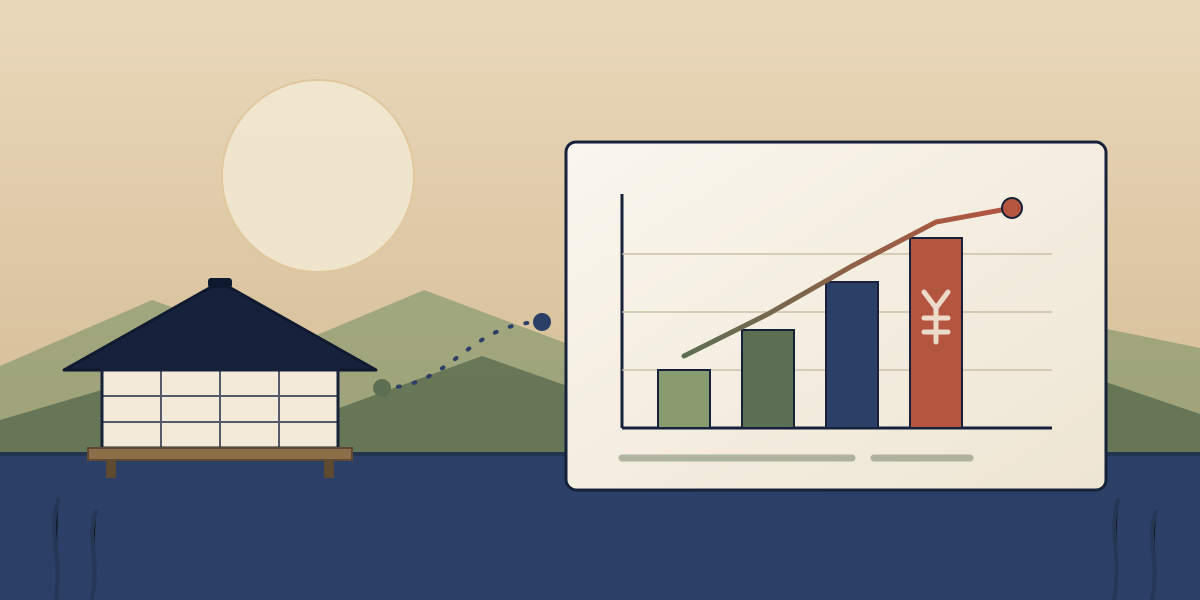
Calculate yield on total capital invested, not asking price. Then stress-test rent and occupancy using local comparables and a realistic maintenance reserve.
What matters in practice
A ¥3 million house renting for ¥60,000 per month appears to yield 24% gross on purchase price. If it needs ¥4 million of renovation and ¥500,000 of acquisition/setup cost, the same rent is below 10% gross on actual capital before vacancy and expenses.
For foreign buyers, the useful way to approach this is to separate the legal rule from the operational problem. Ownership may be permitted while financing, documentation, renovation, tax administration or local management still determines whether the property is sensible.
A practical process
- 1. Add purchase price, closing costs and all work required to reach rentable condition.
- 2. Use actual local rental comparables for similar detached houses.
- 3. Deduct management, vacancy, insurance, fixed costs and a repair reserve.
- 4. Model one major repair over the holding period.
- 5. Test the exit value instead of assuming renovation spend is fully recoverable.
The order matters. Resolve deal-breaking legal or physical constraints before spending time optimizing smaller details. A low asking price is not useful if the title, access, building or operating plan does not work.
What to verify before you commit
- Very small tenant pools.
- Seasonal demand mistaken for year-round demand.
- High turnover or management travel in remote towns.
- Septic, roof and exterior costs borne by the owner.
- Non-resident tax and withholding.
Ask for source documents wherever a point can be documented, and use the appropriate specialist when it cannot. Listing text is useful for screening; it is not a structural report, title opinion or tax advice.
For foreign and non-resident buyers
For overseas investors, local management is not optional. A nominally high-yield house that requires owner intervention can perform worse than a lower-yield apartment with professional management.
Buying from abroad also adds mundane but important work: matching names and addresses across documents, moving yen on time, arranging a power of attorney where needed, receiving tax notices and keeping somebody local who can respond when the property needs attention.
Bottom line
Use net yield on total invested capital and a conservative occupancy assumption. If the deal only works on gross rent divided by asking price, it does not work yet.
Use current official information for rules and taxes and verify property-specific facts with the responsible licensed agent, judicial scrivener, inspector, architect or tax professional as appropriate.
Put the checklist against real listings
Engawa lets you search Japanese property in English and narrow the catalogue before spending time and money on professional diligence.
Sources
Public feature and rule references were checked against these official sources on 8 August 2026. Product plans, prices, inventory and rules can change; verify current details before acting.
Frequently asked questions
What is a good rental yield on a rural Japanese house?
There is no universal target. Rural houses can show high gross yields, but investors should judge net return on total capital after renovation, vacancy, management, tax, insurance and repairs.
Can foreigners buy property in Japan?
Foreign nationals can generally own land and buildings in Japan without Japanese citizenship or residency. The practical constraints are financing, identity and registration documents, tax administration, due diligence and transaction coordination rather than a blanket foreign-ownership ban.
Does buying a house in Japan give you a visa?
No. Japanese real-estate ownership and immigration status are separate. Buying a house or land does not itself create residency rights, a visa or an extension of permitted stay.
Should I verify an English-translated Japanese property listing?
Yes. Treat English portals and translations as discovery tools. Before an offer, confirm current availability, title and rights, legal road access, boundaries, utilities, building condition, taxes and transaction terms with the responsible agent and appropriate qualified professionals.
Before you go
Get the listings that match what you just read
Buying in Japan takes most people months. One email a week with new listings, what they really cost all-in, and the ones worth a closer look.